Complete Applications Guide for Stainless Steel Rope Mesh Railing Published: August 07, 2026 | For Architects, Specifiers, Contractors & Building Developers Stainless‑steel rope mesh railing serves as a modern open‑vision infill alternative to glass, solid panels and traditional bar railings. Flexible cable mesh brings transparency, vandal‑resistance and low‑maintenance performance for residential, commercial and public infrastructure. […]
Published: August 07, 2026 | For Architects, Specifiers, Contractors & Building Developers
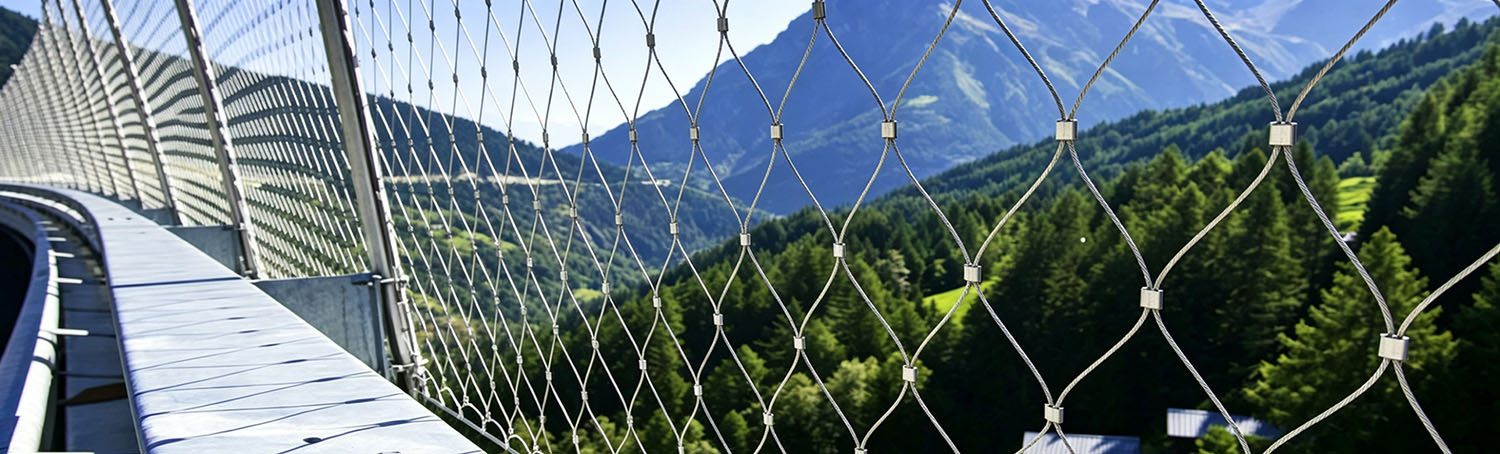
Stainless‑steel rope mesh railing serves as a modern open‑vision infill alternative to glass, solid panels and traditional bar railings. Flexible cable mesh brings transparency, vandal‑resistance and low‑maintenance performance for residential, commercial and public infrastructure. However, improper mesh specification, joint type or material grade may trigger fall‑hazards, head‑trapping risks or premature corrosion. This guide covers full application scenarios, technical specs, safety compliance, material options and critical installation reminders. Refer to our rope mesh aperture & wire‑diameter selection guide and ferrule‑crimped vs hand‑knotted rope mesh for deeper technical reference.
| Application | Suggested Aperture | Rope Diameter | Mesh Type | Key Safety Notes |
|---|---|---|---|---|
| Residential Balcony Railing | 40‑50 mm | 2.0 mm | Ferrule‑crimped | Prevent child head‑trapping; aperture ≤50 mm mandatory for family housing with kids. |
| Indoor & Outdoor Staircase Balustrade | 40‑50 mm | 2.0‑2.4 mm | Ferrule‑crimped | Must resist lateral guard‑load; no large gaps for foot‑stepping climbing. |
| Public Terrace / Observation Deck | 40 mm max | 2.4 mm | Ferrule‑crimped | High‑people‑flow public area; strict anti‑climb & anti‑trapping requirement. |
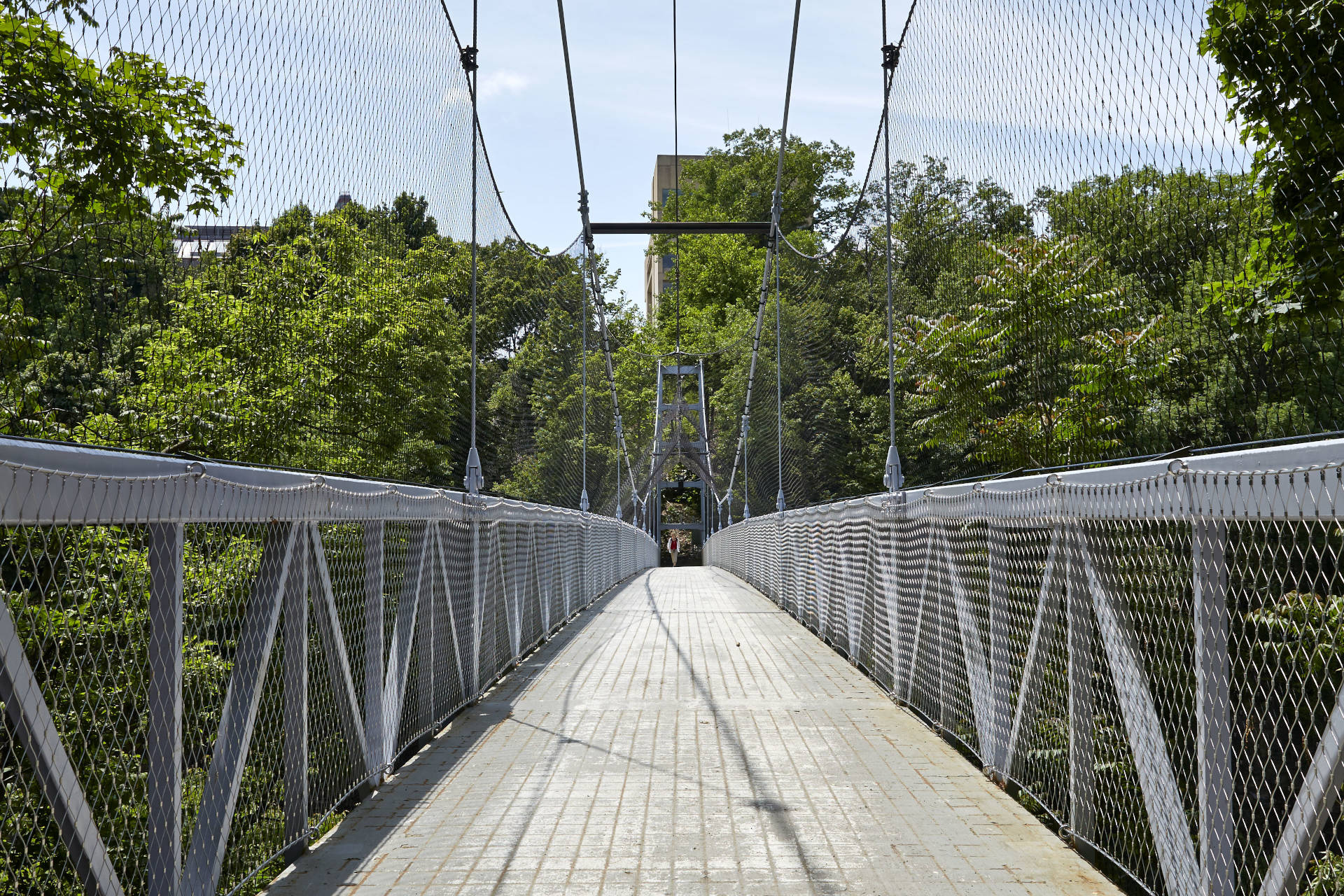
| Pedestrian Bridge Railing | 40‑50 mm | 2.4 mm | Ferrule‑crimped | Wind‑load consideration; robust frame connection required. |
| Curved / Arc‑Shaped Railing | 40‑50 mm | 2.0‑2.4 mm | Ferrule‑crimped for gentle curve; Hand‑knotted for sharp complex curve | If hand‑knotted selected, strictly control installation tension to avoid aperture expansion. |
| Hotel & Commercial Building Facade Railing | 40‑50 mm | 2.0‑2.4 mm | Ferrule‑crimped | Balance safety specification and architectural visual effect. |
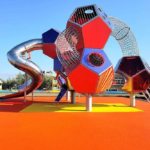
| Playground / Kindergarten Safety Barrier | ≤40 mm | 2.4 mm | Ferrule‑crimped only | Zero tolerance for aperture shifting; anti‑finger‑entrapment critical. |
| Indoor Decorative Partition (Non‑fall‑protection) | 80‑120 mm | 1.2‑1.6 mm | Ferrule‑crimped / Hand‑knotted | Not for fall‑restraint purpose; purely visual separation. |
Long‑term lateral pushing force shifts knots, aperture expands, brings fall‑risk and entrapment hazard.
80‑100 mm aperture looks beautiful but violates child‑safety standards, causes head‑trapping risk.
Salt‑air corrosion generates surface rust spots within few years, even if mechanical specs are correct.
Rope mesh is infill only. Posts and rails must satisfy local building code load test requirements.
Yes for most residential and public projects. It excels where anti‑shatter and ventilation are required. Glass is still preferred if full wind‑shield effect is needed.
Common single panel height up to 3.0 m. For taller balustrades, add intermediate horizontal support rails to reduce mesh sag risk.
Yes. Stainless steel clamping bars, eye bolts and tensioning hardware are required for stable edge fixation. Simple wire tying is not acceptable for safety‑grade railing.
Send your railing drawings, project location (inland / coastal), building‑type and local code requirements. Our engineering team provides complete mesh spec, material grade and fixing‑hardware suggestion for stainless steel rope mesh railing. Material test certificates are available upon request.