How To Choose Stainless‑Steel Rope Mesh: Aperture, Wire Diameter, Anti‑Climb & Safety Standards Published: August 07, 2026 | For Architects, Zoo Designers, Landscape Contractors & Specifiers Wrong aperture or wire diameter will cause serious risks: animal escape, child‑climbing hazard, finger trapping, mesh breakage or unnecessary over‑budget cost. Stainless‑steel rope mesh is widely used for zoo […]
Published: August 07, 2026 | For Architects, Zoo Designers, Landscape Contractors & Specifiers
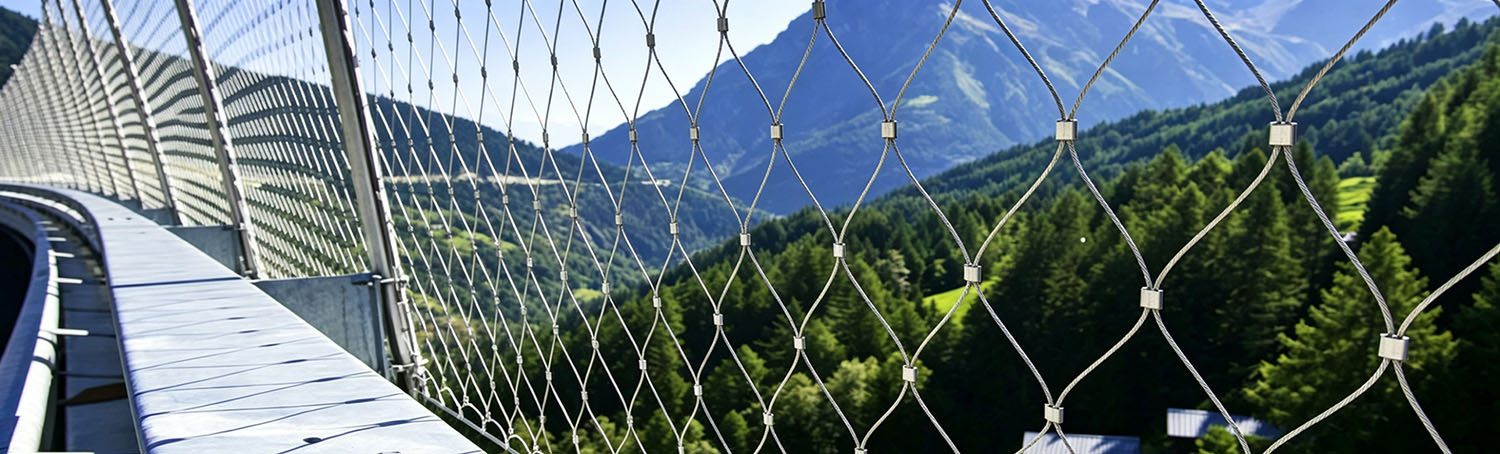
Wrong aperture or wire diameter will cause serious risks: animal escape, child‑climbing hazard, finger trapping, mesh breakage or unnecessary over‑budget cost. Stainless‑steel rope mesh is widely used for zoo enclosure rope mesh, bird aviary, stainless steel rope mesh railing, safety balustrade and green wall rope mesh. This guide covers aperture selection, wire diameter, anti‑climb rules and real‑world project‑proven specifications.
| Application Scenario | Suggested Aperture | Rope Diameter | Core Notes & Safety Rules |
|---|---|---|---|
| Small birds (finches, budgies) | 20 mm × 20 mm | 1.2 mm | Prevent small‑bird escape; smooth cable avoid wing injury. |
| Medium parrots (African grey, cockatiel) | 30‑38 mm ×30‑38 mm | 1.6 mm | Resist moderate pecking force, balance visibility & strength. |
| Large macaw / cockatoo | 50 mm × 50 mm | 2.0 mm | Heavy bite‑force requirement; never use below 1.8 mm for macaws. |
| Birds of prey / large aviary dome | 50‑60 mm ×50‑60 mm | 2.0‑2.4 mm | Large‑span roof net, add intermediate support cables. |
| Primates / monkey enclosure | ≤40 mm ×40 mm | 2.0‑2.4 mm | Anti‑climb critical! Too‑large aperture creates hand‑grip footholds for climbing. |
| Large animals (wolf, bear, big cat) | 40‑50 mm ×40‑50 mm | 2.4‑3.2 mm | High tensile strength against impact & biting; edge reinforcement required. |
| Balcony / bridge balustrade safety (human anti‑fall) | ≤50 mm ×50 mm | 2.0‑2.4 mm | Avoid aperture >80 mm to prevent child head trapping; must meet local guard‑load standard. |
| Anti‑climb security fence (human‑proof) | 30‑40 mm ×30‑40 mm | 2.0 mm | Small aperture removes foothold; larger holes allow foot‑insert climbing risk. |
| Green wall / climbing plant trellis | 150‑300 mm ×150‑300 mm | 1.6‑2.0 mm | Large opening for vine growth; do NOT use small bird‑cage apertures for planting. |
| Indoor decorative mesh, partition | 80‑120 mm ×80‑120 mm | 1.2‑1.6 mm | Pure visual purpose, no safety‑enclosure requirement. |
Many clients order 200 mm mesh for zoo exhibit. Large holes enable animal escape or climbing out. Green‑wall mesh is for plants only, not for containment.
1.2 mm rope can be chewed through by macaw’s powerful beak. Always upgrade to ≥2.0 mm for large parrots.
Salt‑spray environment will create rust spotting in 2‑4 years, even with perfect aperture and wire diameter.
Loose installation stretches diamond openings larger than design value, creates safety risk even if original factory specification is correct.
Use the smallest aperture required by the smallest / most‑destructive animal in that exhibit. For mixed‑bird aviary, follow small‑bird specification to prevent escape.
Aperture 25‑30 mm, wire diameter 1.6 mm. Prevent cat paws from getting stuck or squeezing through openings.
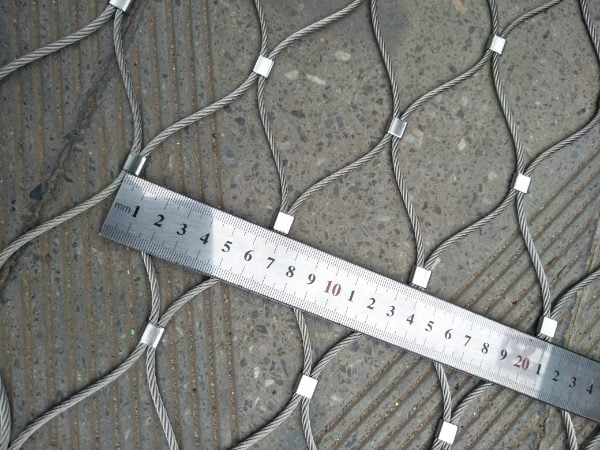
Ferrule‑crimped offers stable fixed aperture, best for safety & zoo projects. Hand‑knotted is flexible for complex curved shapes, but openings can shift under heavy impact.
Share your project type, location, target animal / safety requirement and budget. Our engineering team will give exact aperture, wire diameter and material grade suggestion for zoo enclosure rope mesh, balustrade or green‑wall projects. We provide MTC material test certificates.