Ferrule‑crimped VS Hand‑Knotted Stainless‑Steel Rope Mesh: Process, Pros‑Cons & Project Selection Published: August 07, 2026 | For Zoo Designers, Architects, Landscape Contractors & Specifiers Two mainstream manufacturing technologies dominate stainless‑steel flexible rope mesh: ferrule‑crimped (metal‑sleeve pressed) and hand‑knotted (hand interwoven knotted). Many specifiers confuse them. Though both use 7×7 /7×19 stainless steel cable, their joint […]
Published: August 07, 2026 | For Zoo Designers, Architects, Landscape Contractors & Specifiers
Two mainstream manufacturing technologies dominate stainless‑steel flexible rope mesh: ferrule‑crimped (metal‑sleeve pressed) and hand‑knotted (hand interwoven knotted). Many specifiers confuse them. Though both use 7×7 /7×19 stainless steel cable, their joint structure decides aperture stability, anti‑escape performance, installation adaptability, cost and service‑life risk. Wrong selection will cause animal escape, finger‑trapping, mesh‑deformation or over‑budget. This article explains process differences, comparison table and real‑world project‑selection advice, linked with our rope mesh aperture & wire‑diameter selection guide.
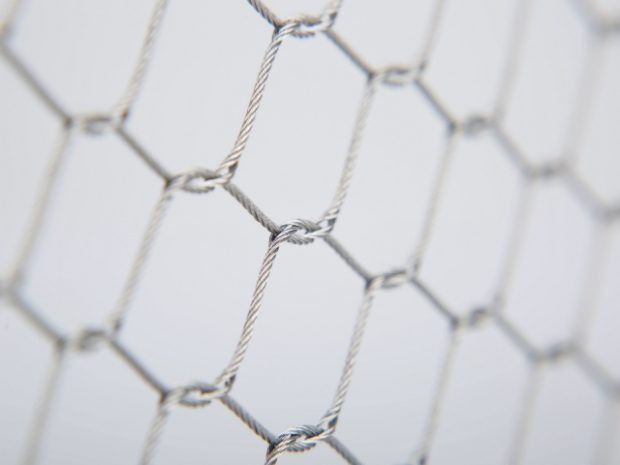
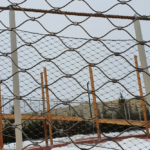
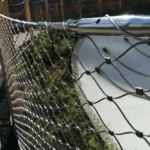
Intertwined cable knot without metal ferrule
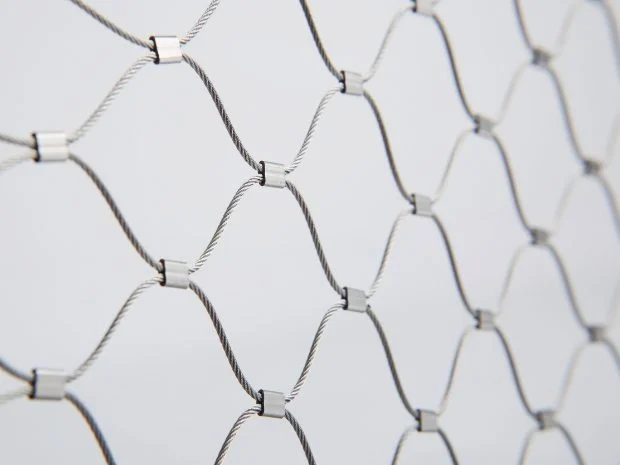
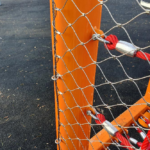
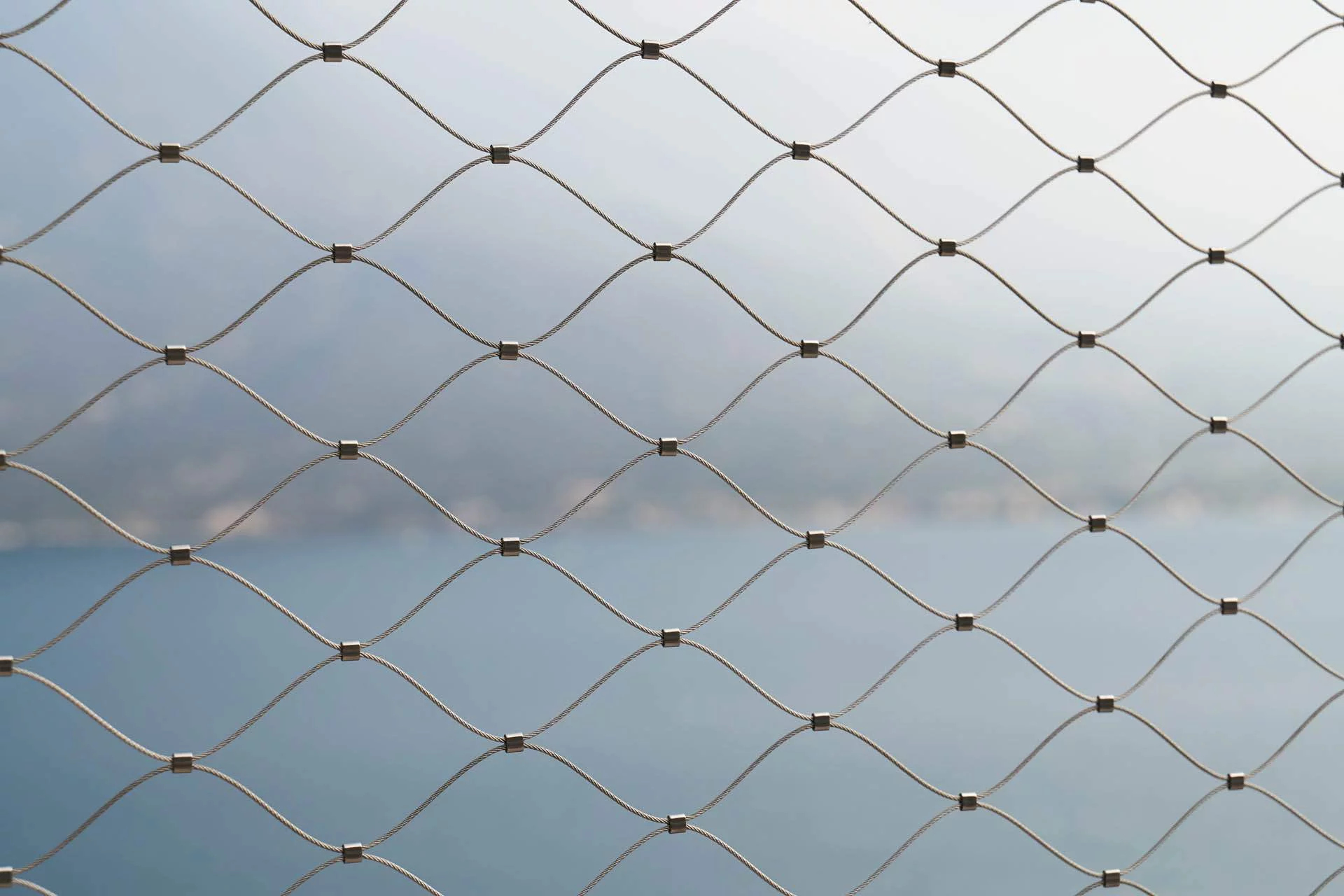
Hydraulic pressed metal ferrule fixed cable crossing
| Comparison Item | Ferrule‑crimped Mesh | Hand‑Knotted Mesh |
|---|---|---|
| Aperture Stability | ⭐⭐⭐⭐⭐ Fixed aperture; joints will not slide. Critical for anti‑escape / anti‑finger‑trap safety projects. | ⭐⭐⭐ Knots can slip under heavy impact; diamond opening may enlarge after long‑term pulling force. |
| Impact & Bite‑Resistance | Excellent. Ferrules lock cables; local impact will not spread aperture‑deformation across panel. | Good. Heavy repeated biting / pulling may shift knots locally. |
| Shape Adaptability | Good for flat / gentle‑curve surfaces; complex 3D shapes need cutting & splicing panels. | ⭐⭐⭐⭐⭐ Best for complex curvature, spherical, irregular 3D surfaces, free‑form architectural forms. |
| Animal‑Safety Risk | Smooth crimped ferrules, no sharp burrs. No risk of animal claw / beak catching on knots. | Twisted‑knot bulges exist; birds / small‑animal claws may hook on knot‑protrusions. |
| Production & Delivery | Panel‑based mass‑production, stable lead‑time; limited by standard panel‑size. | 100% hand‑made, long lead‑time; quality highly depends on worker skill. |
| Unit‑Cost | Medium‑high; lower‑cost for large‑area standard‑size projects. | Higher; labor‑intensive for complex custom shapes. |
| On‑Site Installation | Fast panel mounting; must maintain proper tension to keep original diamond‑angle. | Can be reshaped on‑site; installers must avoid over‑pulling to prevent knot‑sliding. |
| Repairability | Damaged panel needs partial‑panel replacement; cannot re‑crimp on‑site. | Local knot‑re‑weaving repair is possible on‑site without full‑panel replacement. |
Repeated pecking / pulling force slides knots, aperture becomes larger; birds escape or get their heads trapped. For animal containment, ferrule‑crimped is preferred.
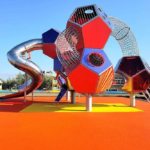
Many small panels need cutting‑and‑splicing; too many joints increase cost and visual discontinuity. Hand‑knotted is better for large‑curved dome‑shapes.
Even well‑woven knotted mesh will shift if installation tension is too high. Tension‑control is critical for both mesh‑types.
Yes. Many zoo‑projects use ferrule‑crimped for vertical containment walls (anti‑escape safety), and hand‑knotted for curved dome roof‑structure.
Given same cable‑diameter, both have similar raw‑cable breaking‑load. The difference is joint‑behaviour: ferrule‑crimped holds aperture; knotted‑mesh joints can slide before reaching raw‑cable breaking‑force.
Qualified factory‑crimped ferrules are smooth, burr‑free. Sharp‑edge risk only comes from poor‑quality low‑grade ferrule‑crimping workmanship.
Share your project drawings, target‑animal type, safety‑requirements and surface‑geometry (flat / curved / dome). Our engineering team advises whether ferrule‑crimped or hand‑knotted mesh suits your zoo enclosure rope mesh, railing or green‑wall system. We provide MTC material certificates and installation‑tension‑guidance.